A CRO programme that nobody can read is a CRO programme nobody funds.

Challenge
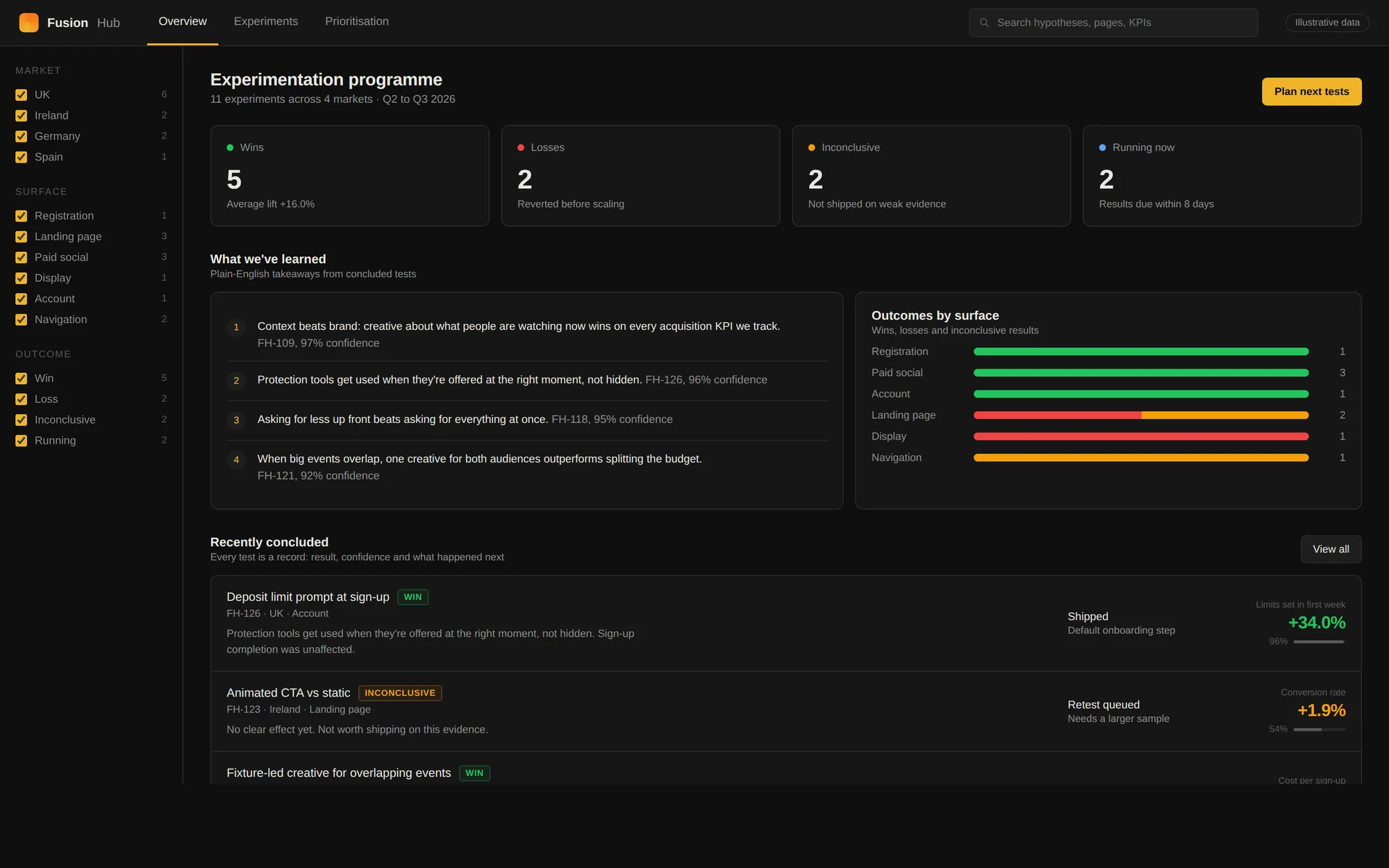
Conversion experimentation generates a lot of evidence and very little memory. Tests get run, a result gets posted in a channel, and six months later nobody can say what was learned, what was retired, or which of the ideas in the backlog were already tried.
The people who decide whether the programme continues are rarely the people running it. They need a view of the whole thing (what is live, what won, what it was worth) without reading a spreadsheet of variant names.
Fusion Hub was built inside Better Collective to close that gap. The original prototype was made in Figma AI. The screens here are a rebuild for this case study, extended with the experiment record and prioritisation views, using illustrative data.
Approach
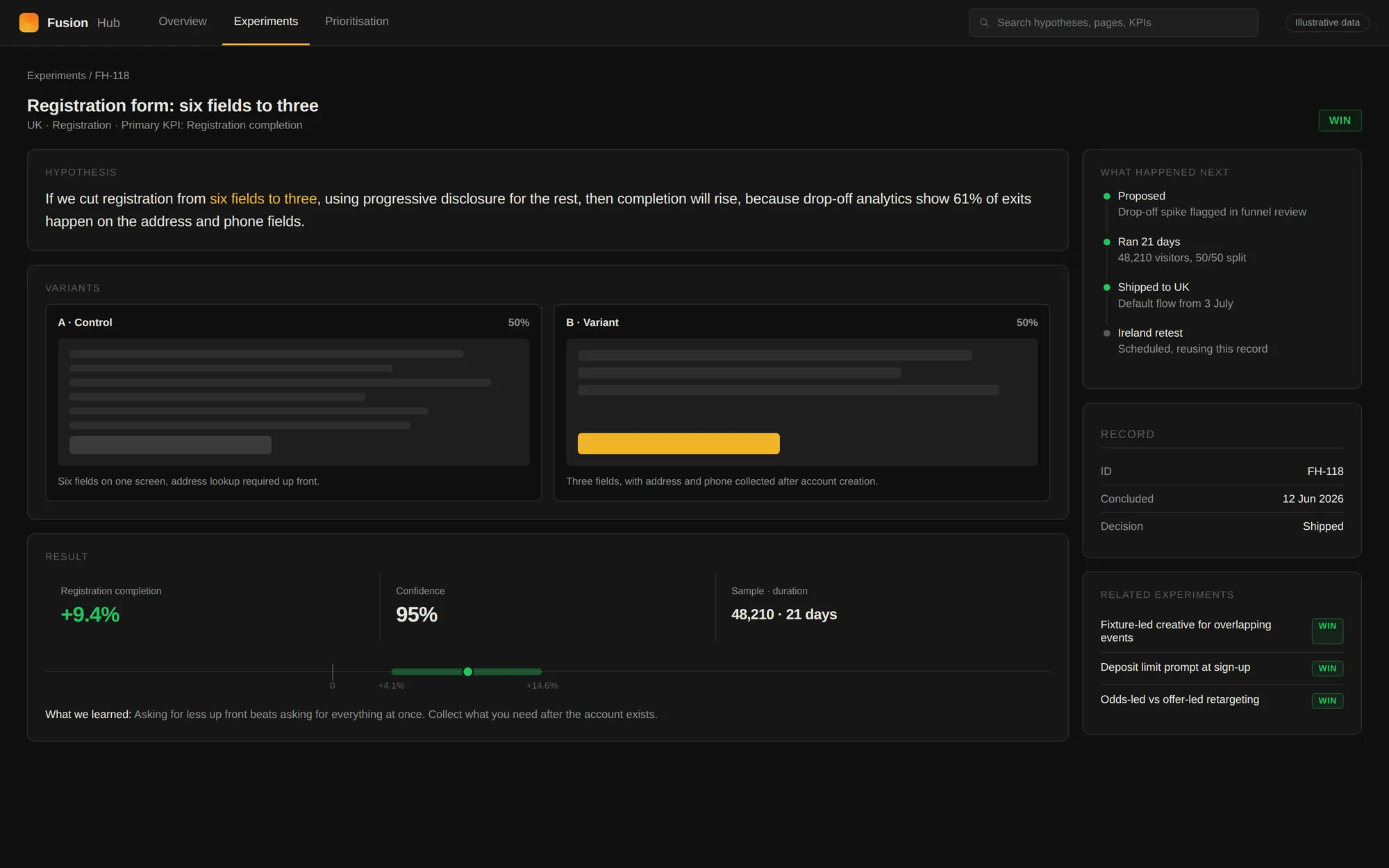
The organising idea is that an experiment is a record, not an event. Every test carries its hypothesis, its result, and what happened to it afterwards (shipped, reverted, or inconclusive) so the backlog stops repeating itself.
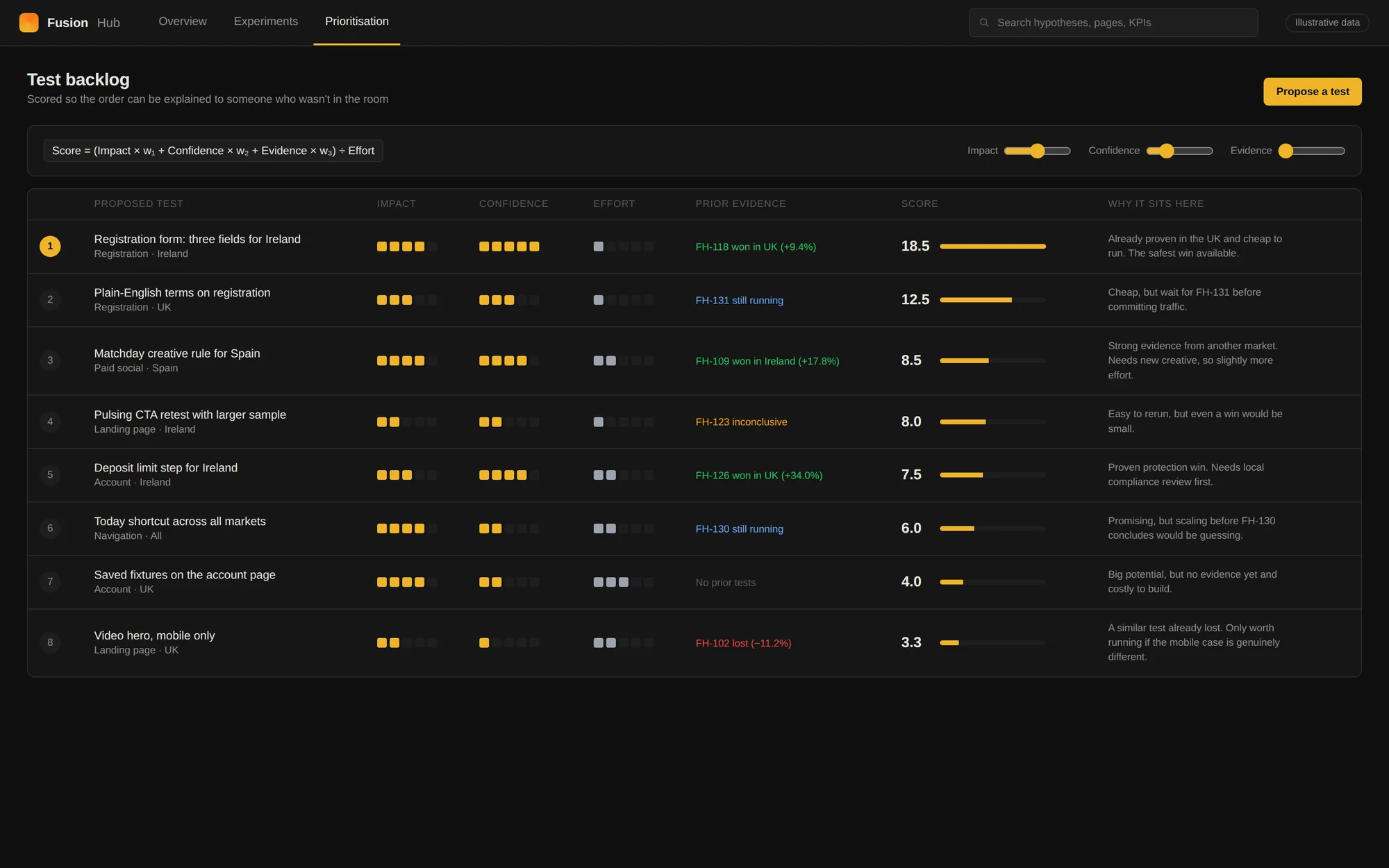
Prioritisation is explicit rather than argued. The accompanying Design Task Prioritisation Framework scores work so that the queue is defensible to someone who wasn't in the room, which is usually the person asking why their request is third.
It pairs with agentic workflow automation built on Relay.app for CRM banner production, the repetitive end of creative operations, handled without a designer in the loop.
Where it is now
A documented case study exists from the programme: a Cheltenham Festival × Champions League A/B test, presented as one example of a broader body of experimentation work rather than a standalone win.
Fusion Hub reached working-prototype stage and was not adopted. It is shown here for how the problem was approached: map how teams actually ran and reported tests, then design the one view a non-specialist could read without being walked through it.