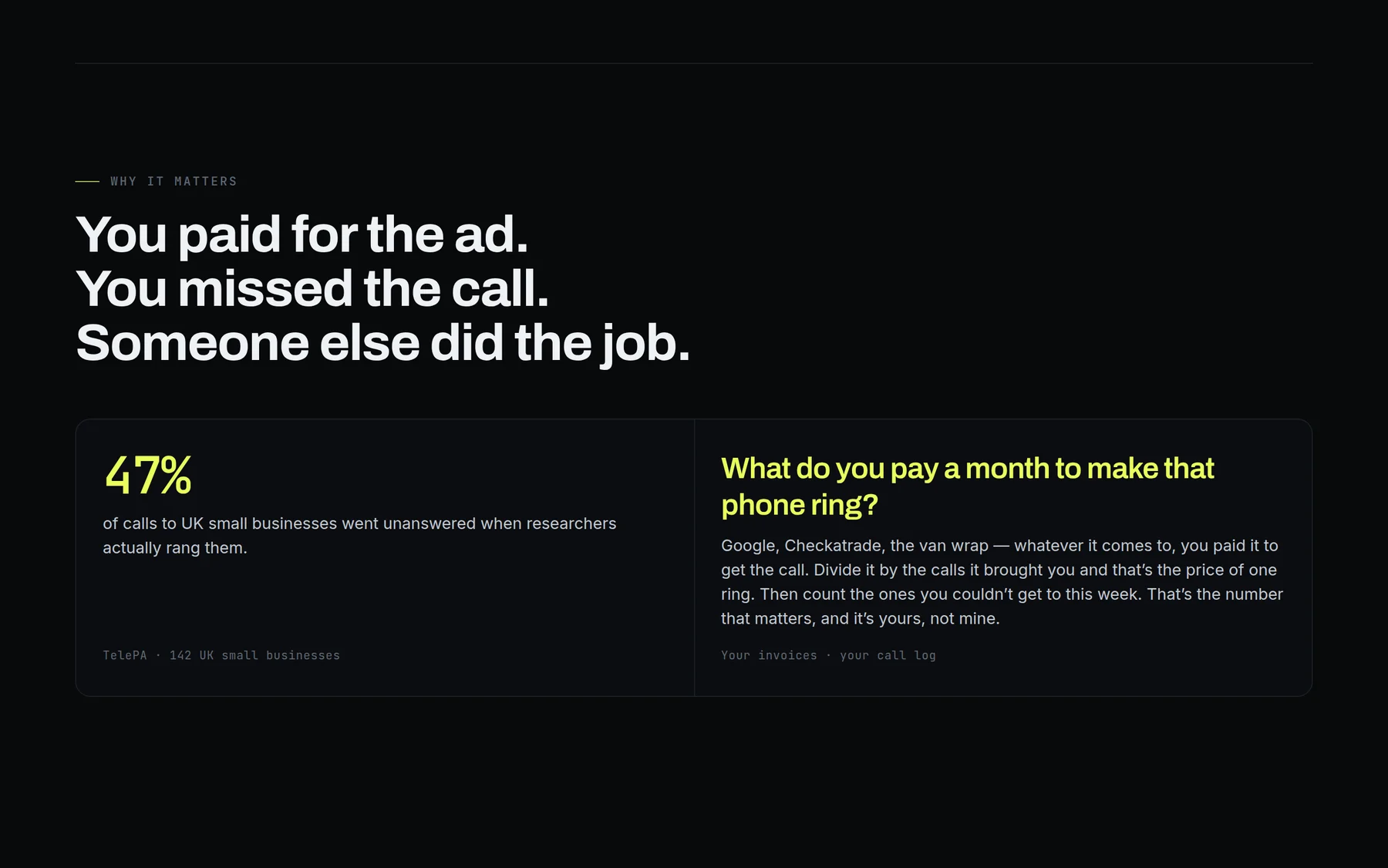
47% of calls to UK small businesses go unanswered. The advertising has already been paid for by then.

Challenge
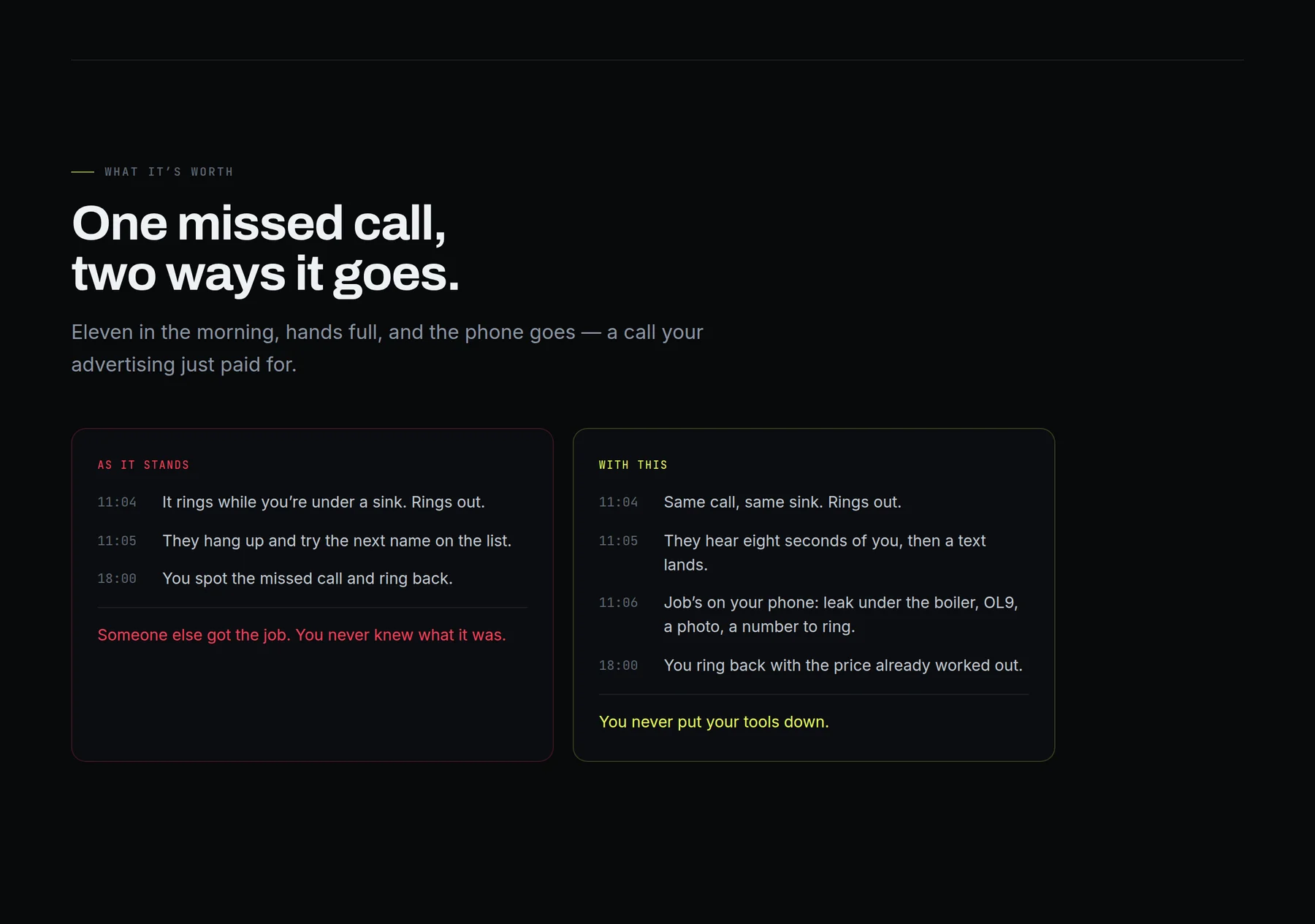
A sole trader with his hands under a sink cannot answer the phone. The caller waits twenty seconds, hangs up, and rings the next name on the list. By six o'clock there is a missed call on the screen and no way of knowing what it was worth.
When researchers actually rang 142 UK small businesses, 47% of calls went unanswered. Every one of those had already been paid for: Google, Checkatrade, the van wrap. The cost is incurred when the phone rings, not when it is answered.
The existing answer is a receptionist service or a voicemail box. Both fail for the same reason: the customer has to want to leave a message, and most of them just ring the next number.
Strategy
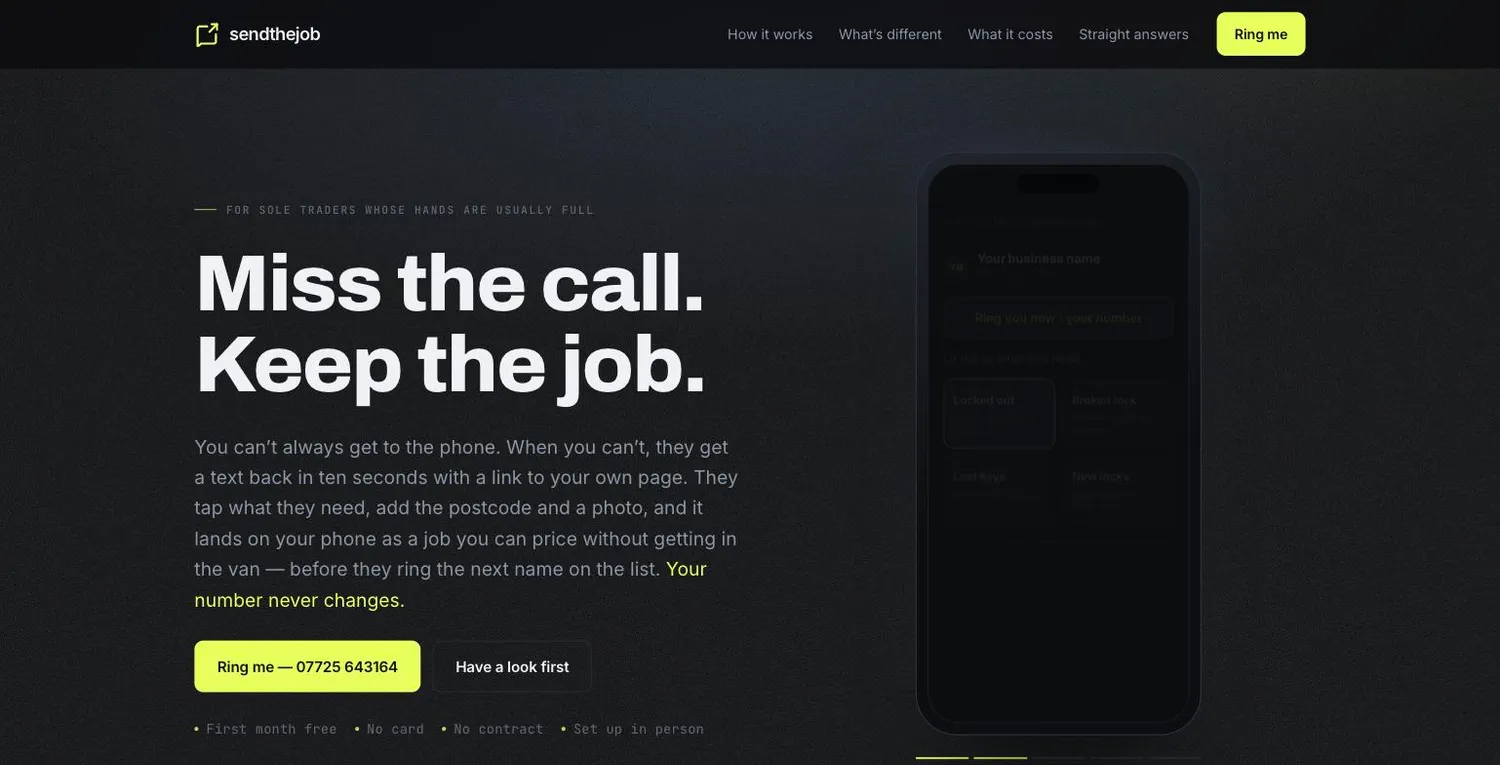
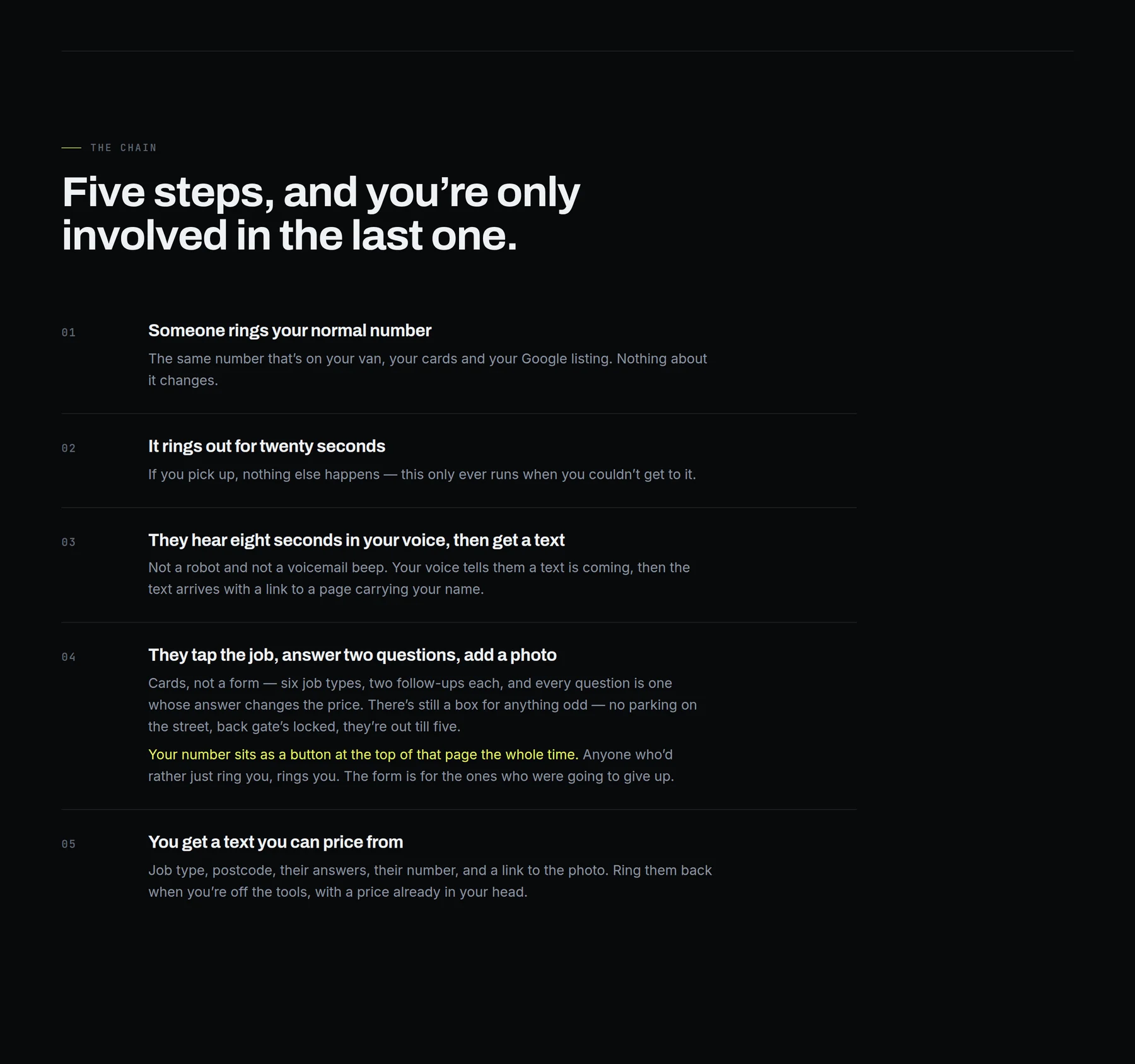
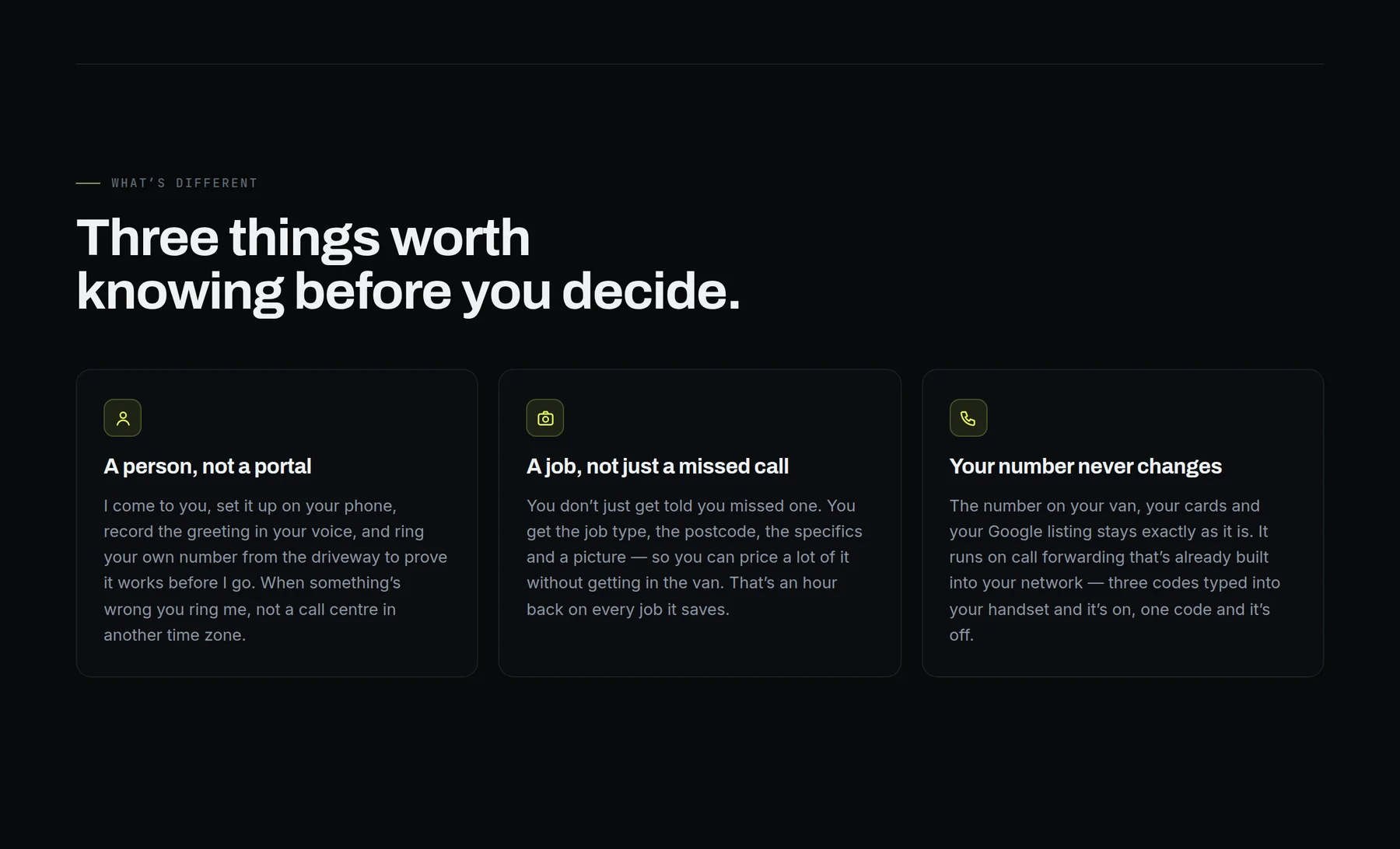
The whole product had to fit around one constraint we refused to break: the number does not change. What is on the van, the cards and the Google listing stays exactly as it is. It runs on call forwarding already built into the network: three codes into the handset to switch on, one to switch off.
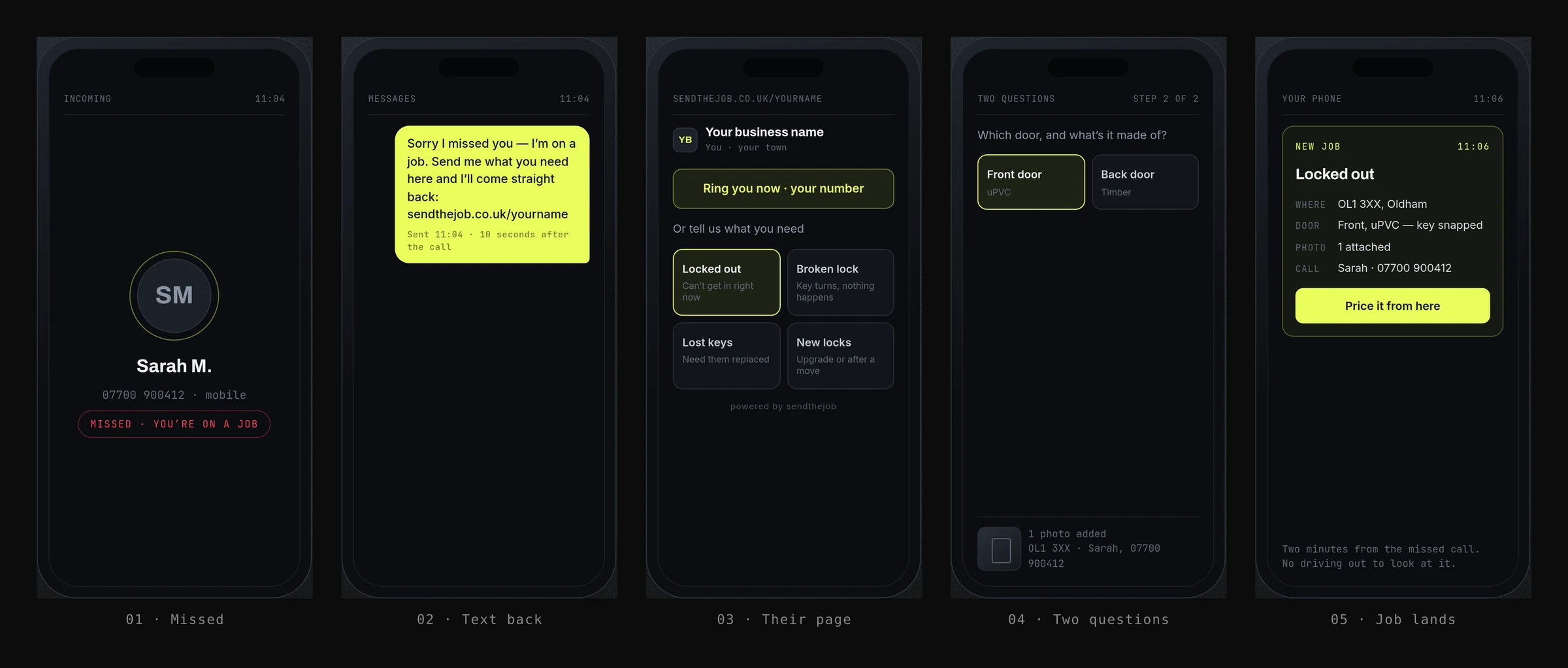
After twenty seconds unanswered, the caller hears eight seconds in the trader's own voice (not a robot, not a beep) saying a text is coming. The text arrives ten seconds later with a link to a page carrying his name.
That page is cards, not a form: six job types, two follow-up questions each, and every question is one whose answer changes the price. A photo, a postcode, and a box for the things that do not fit: no parking on the street, back gate's locked, out till five.
His number sits as a button at the top of the page the whole time. Anyone who would rather just ring, rings. The form only ever catches the ones who were about to give up.
Solution
The product is not 'you missed a call'. It is a job he can price without getting in the van, which is an hour back on every job it saves.
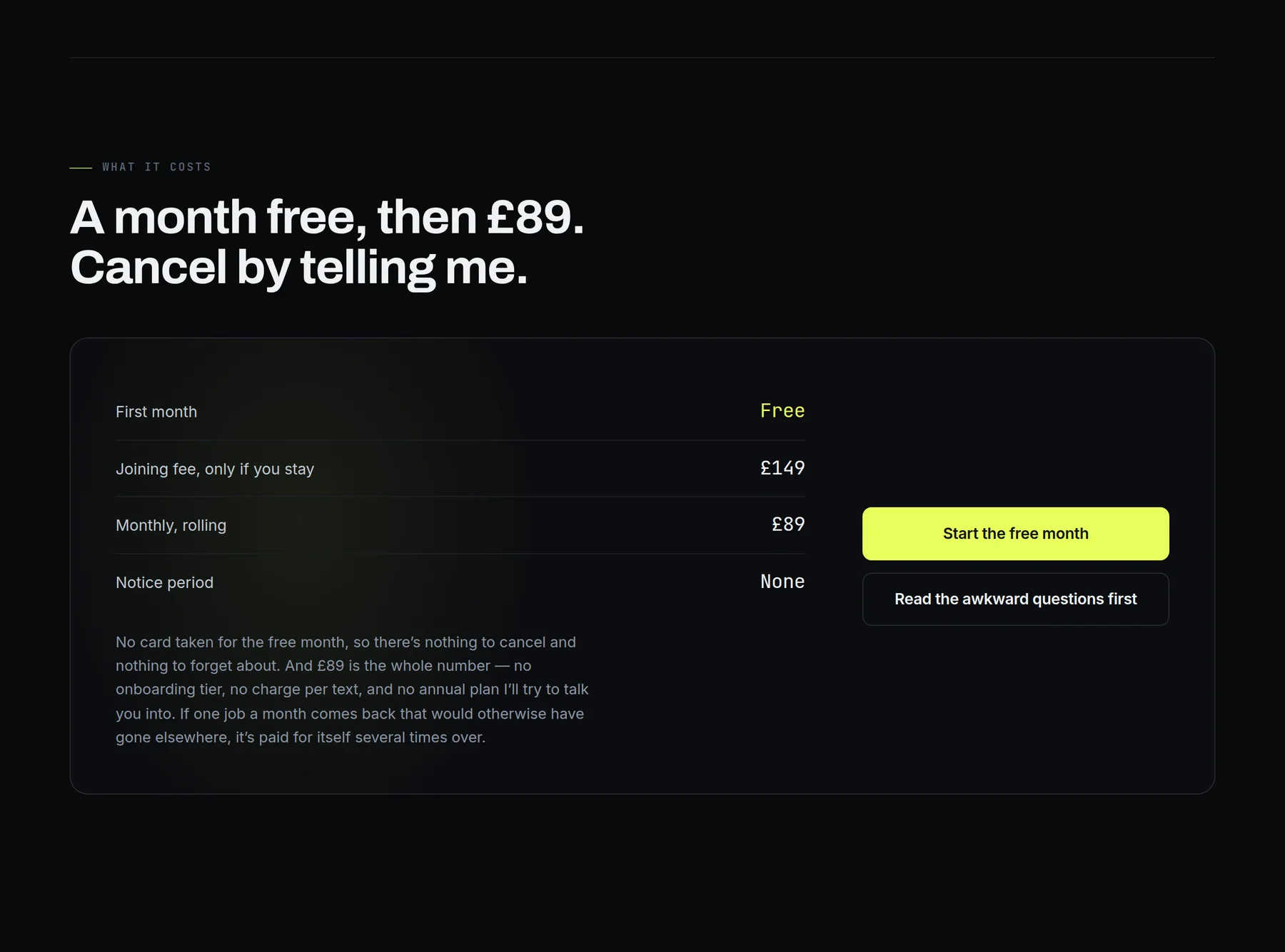
Tone of voice does a lot of the work. This market has been sold to badly for years, so the copy refuses the usual moves: no dashboard language, no growth claims, no annual plan to be talked into. £89 a month is the whole number.
The pricing section does not argue the value: it hands the customer the sum and lets him do it himself: divide what you spend a month on advertising by the calls it brought you, then count the ones you could not get to this week.
Setup is in person. We drive out, set it up on his phone, record the greeting in his voice, and ring his own number from the driveway to prove it works before leaving. A deliberate cost, and the entire trust proposition in a category full of software nobody installs.
Impact
Live at sendthejob.co.uk, serving Oldham and Greater Manchester. Next.js on Vercel, Supabase and Twilio.
£89 a month rolling, no notice period, and a £149 joining fee charged only if the customer stays past the free month. No card is taken for that month, so there is nothing to cancel and nothing to forget about.
It is also the second time we have designed this problem. Sitewise, in 2020, compressed a contractor's ring-round into one broadcast and a set of yes/no replies. Same observation, six years apart, from the other end of the phone.