We cut a 19-click journey to under five.

Challenge
Two million people in the UK live with food allergies. Around 65% of them avoid eating out, because the alternative to guessing is asking a waiter to fetch a laminated allergy matrix (the 'black book') and hoping the kitchen is as careful as the document suggests.
Founder Sunil Mistry, an allergy sufferer himself, was certain there was a better way. What existed was a working prototype and a conviction. What was missing was a brand, a product, and a way for restaurants to use it without adding work to a head chef's day.
The prototype took at least nineteen clicks to get a diner from opening the app to choosing a meal.
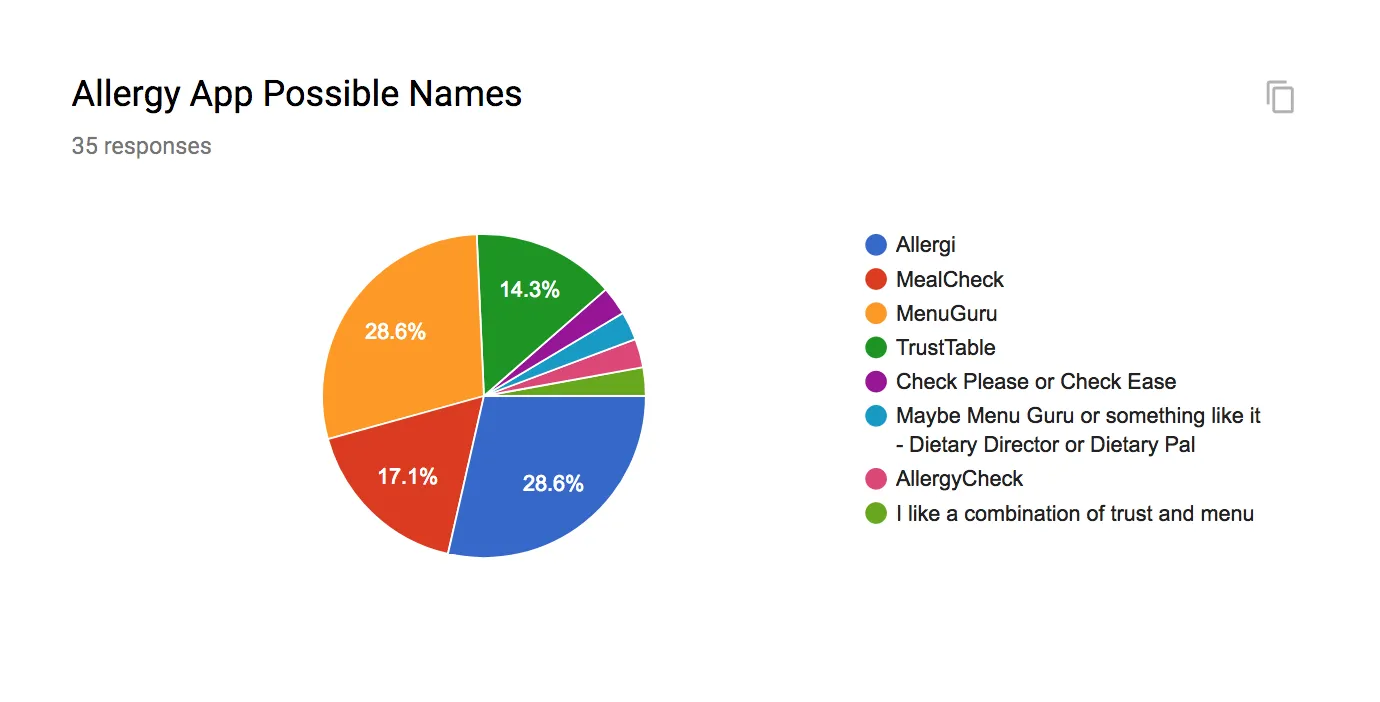
Naming and identity
The brief called it an 'Allergy App'. We argued against that.
Pinning the brand to allergies would cap it at one audience, when the same filtering logic serves anyone with a dietary requirement: religious, medical or chosen. We needed a name informative enough to explain itself and loose enough to grow into a ten-year business.
Menu Guru put the emphasis on guidance rather than restriction. The whole proposition follows from it: a system of care, leaving no ingredient unchecked.

The diner
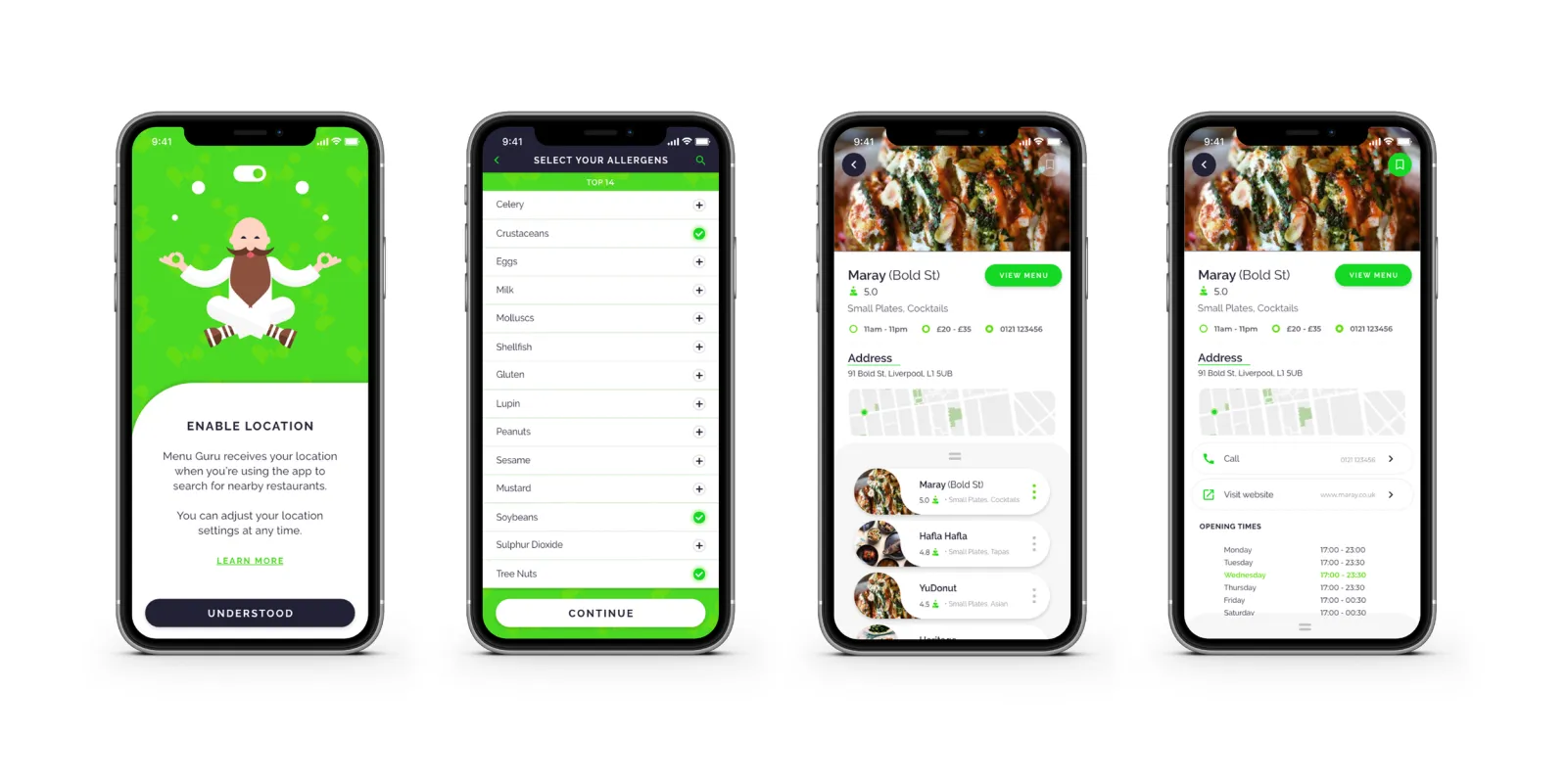
Every allergy tool at the time showed people what they couldn't eat. We built the filter to show what they could. Same data, completely different experience of a menu.
We built bookmarking, full ingredient lists and email receipts. Testing said none of them were wanted, so we removed them. What survived was the flow that mattered: input allergens, filter menu, choose meal, eat. Under five clicks.
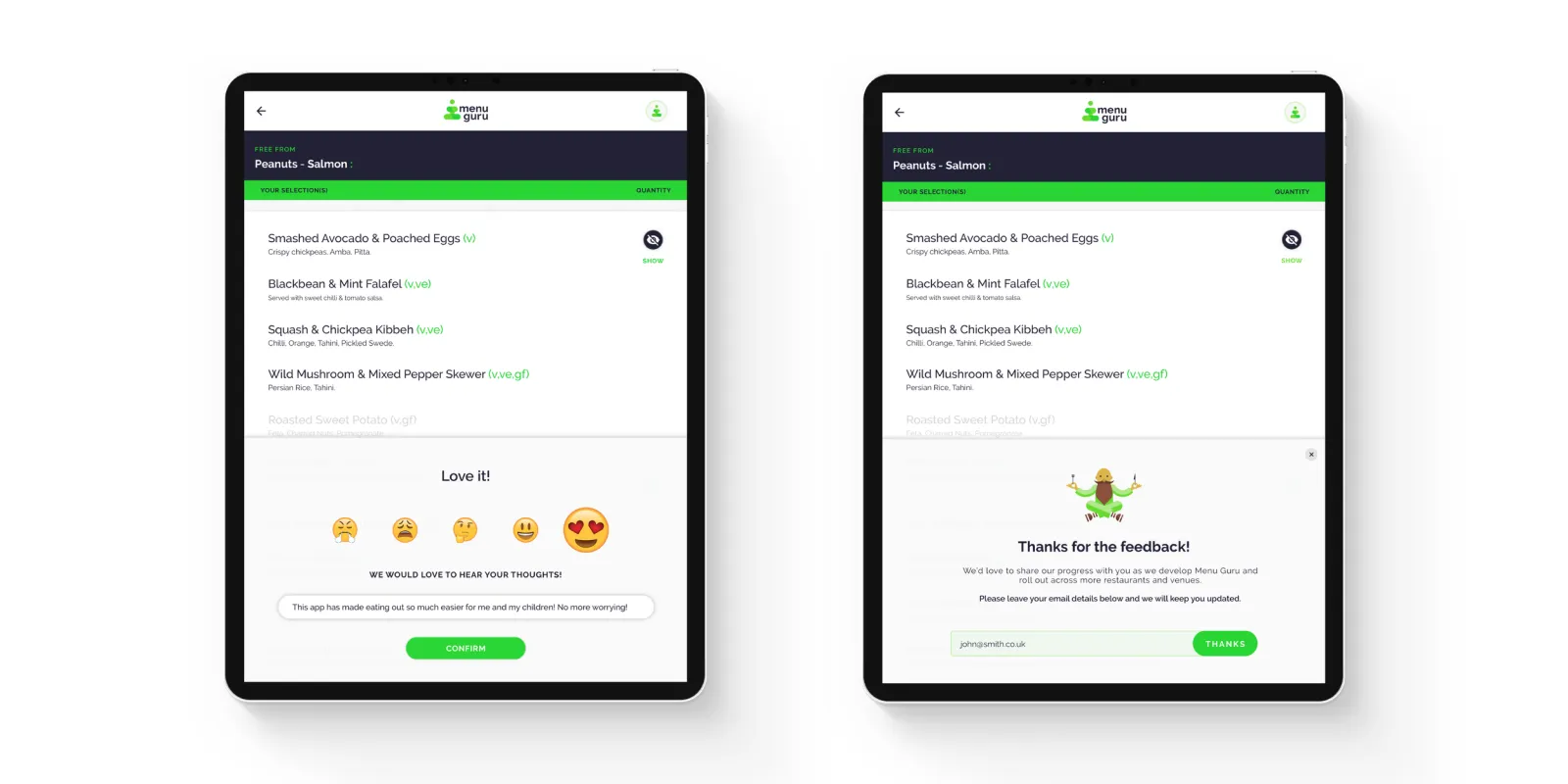
The tablet app adapts to the host restaurant's colours, so it reads as part of the venue rather than a third-party tool bolted on.
The kitchen
The hard problem was never the app. It was getting menus into it.
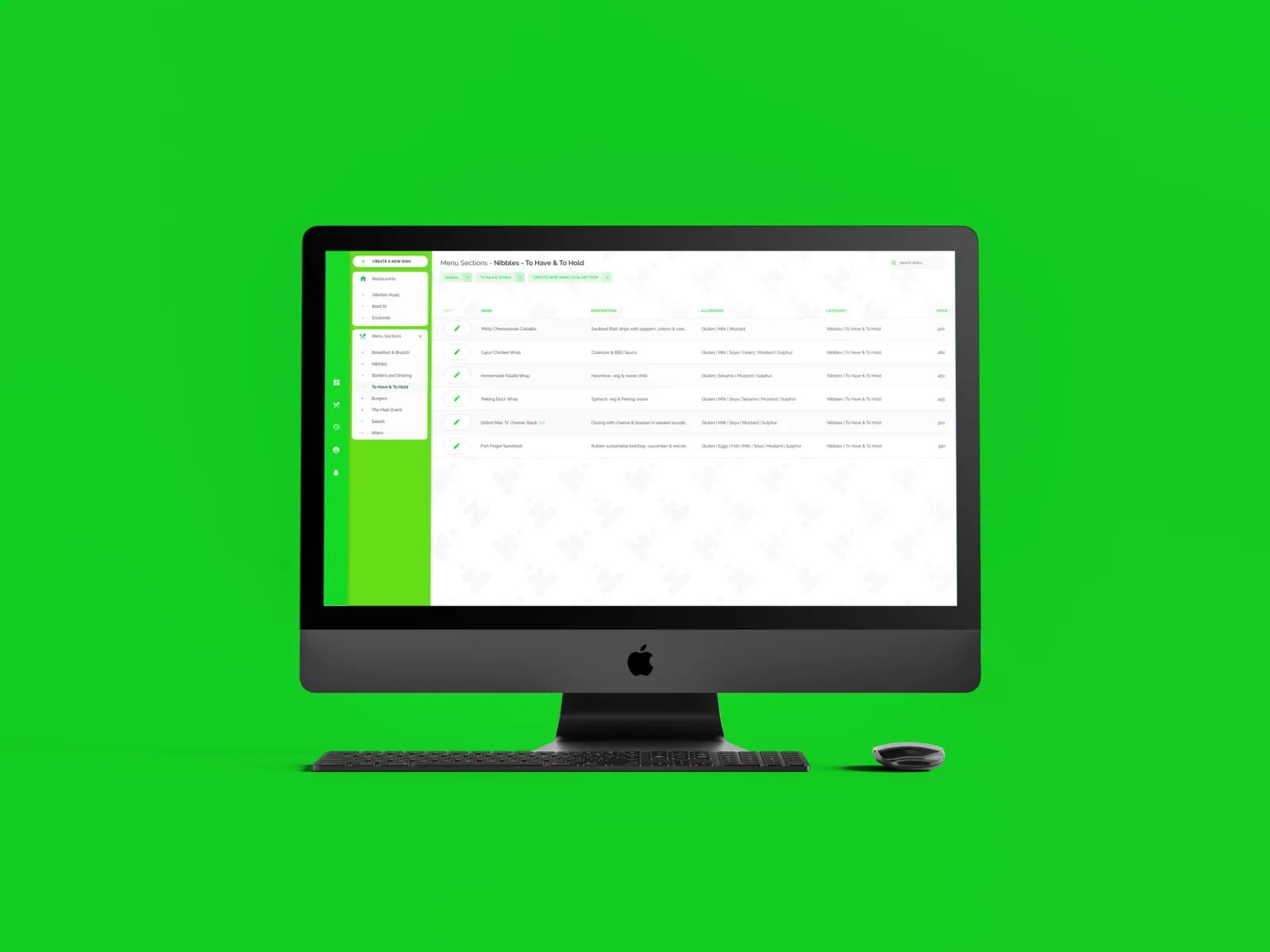
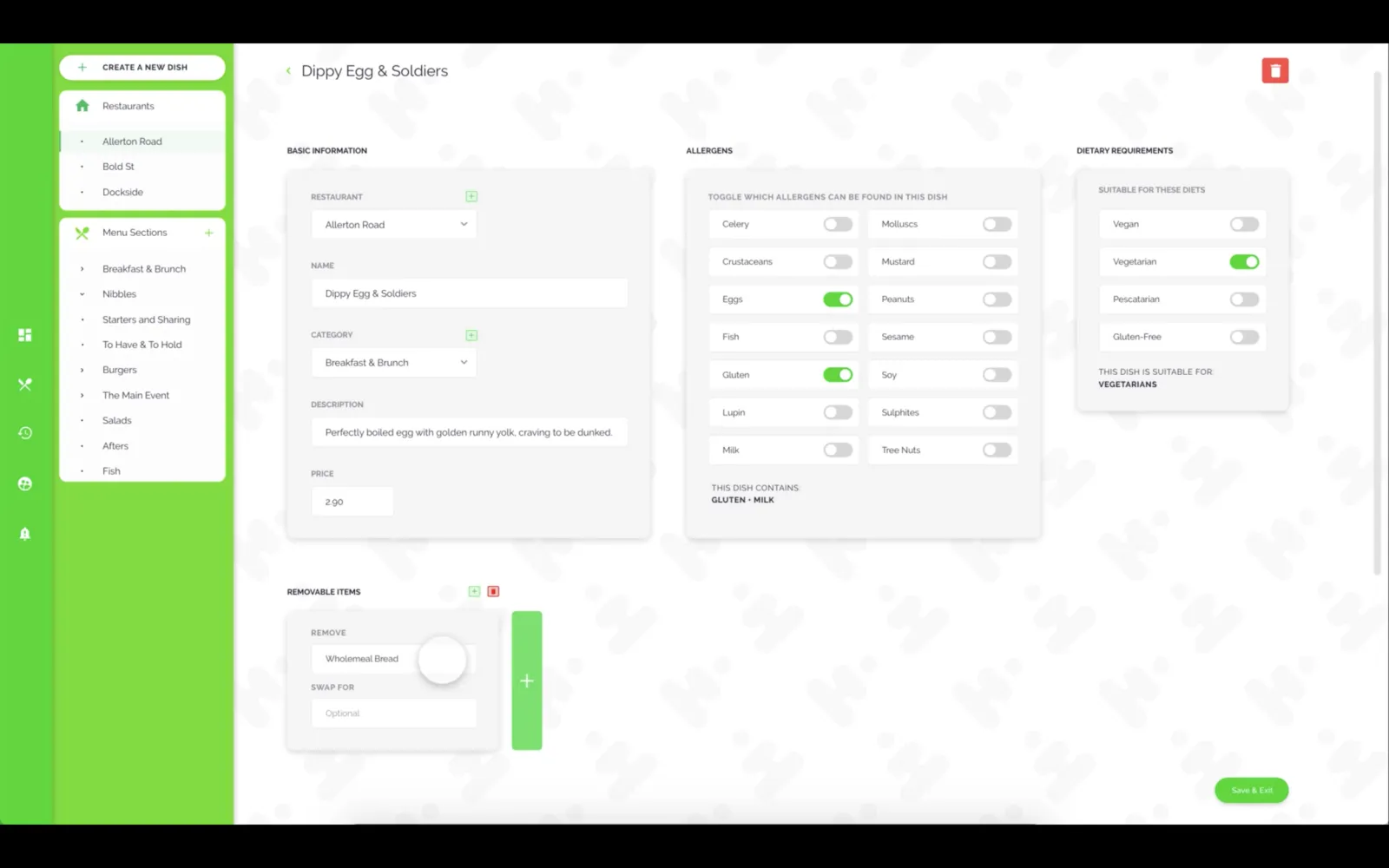
Some restaurants change their menu monthly, some never. Some have documents, some have a chef's handwriting. We designed an ingestion route that took a restaurant's existing menu into an allergy-checked matrix, verified it with allergy experts and the chef, then bulk-uploaded it to a dashboard the kitchen controlled.
Chefs could edit dishes, build sections and sub-sections, and mark single ingredients as removable or swappable, so one optional ingredient no longer pulled an entire dish off an allergy sufferer's menu.
Impact
Menu Guru launched. By 2020 it was running in Maray, Heritage and Sapporo Teppanyaki across Liverpool and Manchester, with a stated plan to onboard two hundred more venues, and was profiled by Prolific North as a Liverpool startup to watch.
The business later went quiet. When Menu Guru was restarted, it was rebuilt around the same mark.
An identity that outlives the company that commissioned it (and gets reached for again when someone picks the idea back up) is the most honest test a brand ever gets.

“Owen has been incredibly valuable in delivering what I believe is one of the best validated products we've had through our process. A piece of feedback we consistently get when the product is shown to allergy sufferers and restaurant owners is that the app looks amazing, and that's a testament to Owen.”
“Quite quickly he learnt and adapted and designed a product that looks polished, professional and delivers a killer customer experience. If I could pick any designer when starting a project, it would be him.”
“The most impressive aspect was your willingness to iterate. Refactor and redesign became just another part of the process.”