Three of our five models failed their own test. We switched them off rather than dress them up.

Challenge
Betting tips are a market built on selective memory. Everyone posts the winners. Nobody publishes the losers, the stake sizes, or what price the market closed at, the one number that says whether a selection was any good.
MaxEdge is the opposite proposition: a football value-betting service where the record is public, the method is arithmetic rather than opinion, and the honest answer on a lot of days is that there is nothing worth backing.
That is a hard thing to design. The visual language of the category is hype: green arrows, streak counters, urgency. We needed a product that reads as an instrument.
Method
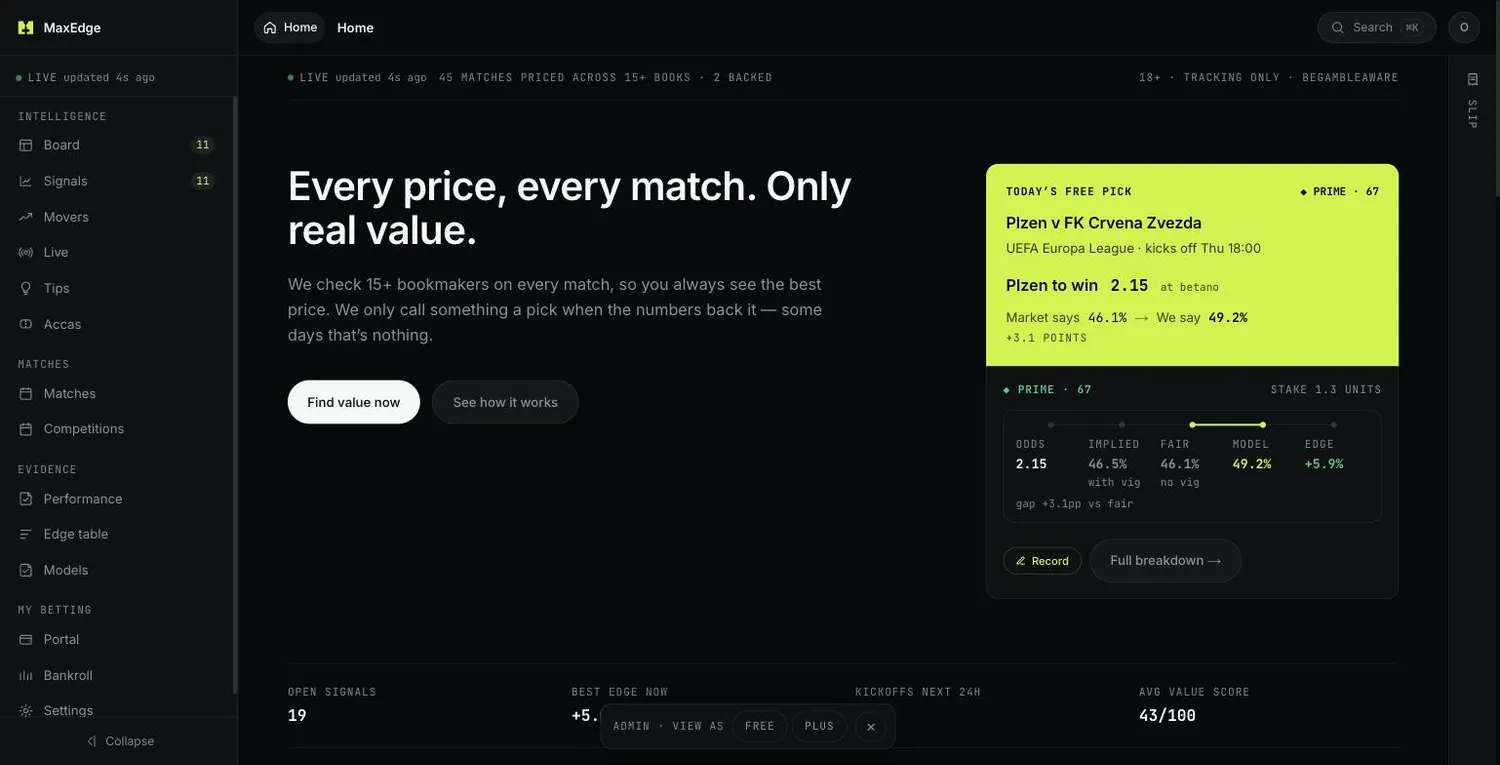
We price every match across 15+ bookmakers and strip the margin out, which turns a shop price into a fair probability. The gap between our model's number and that fair number is the edge. Arithmetic, not a view.
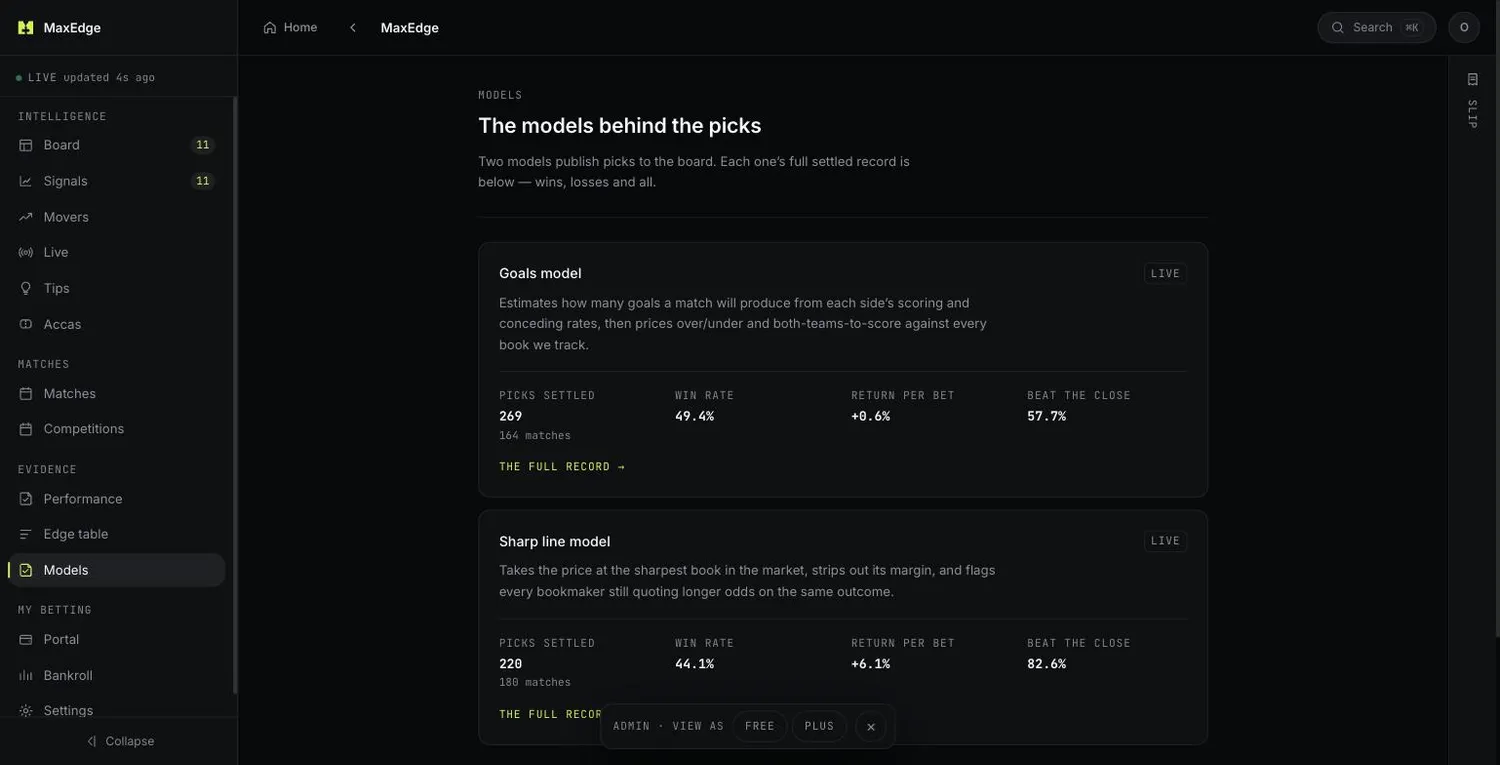
A model only publishes once we have measured how wrong it usually is. Three of the five we built failed that calibration test. They were switched off, not softened, not relabelled as experimental. Two publish today: a sharp line model and a goals model.
Both are judged on whether they beat the closing price across hundreds of settled picks, not on whether they had a good season. A coin flip has good seasons.
Interface
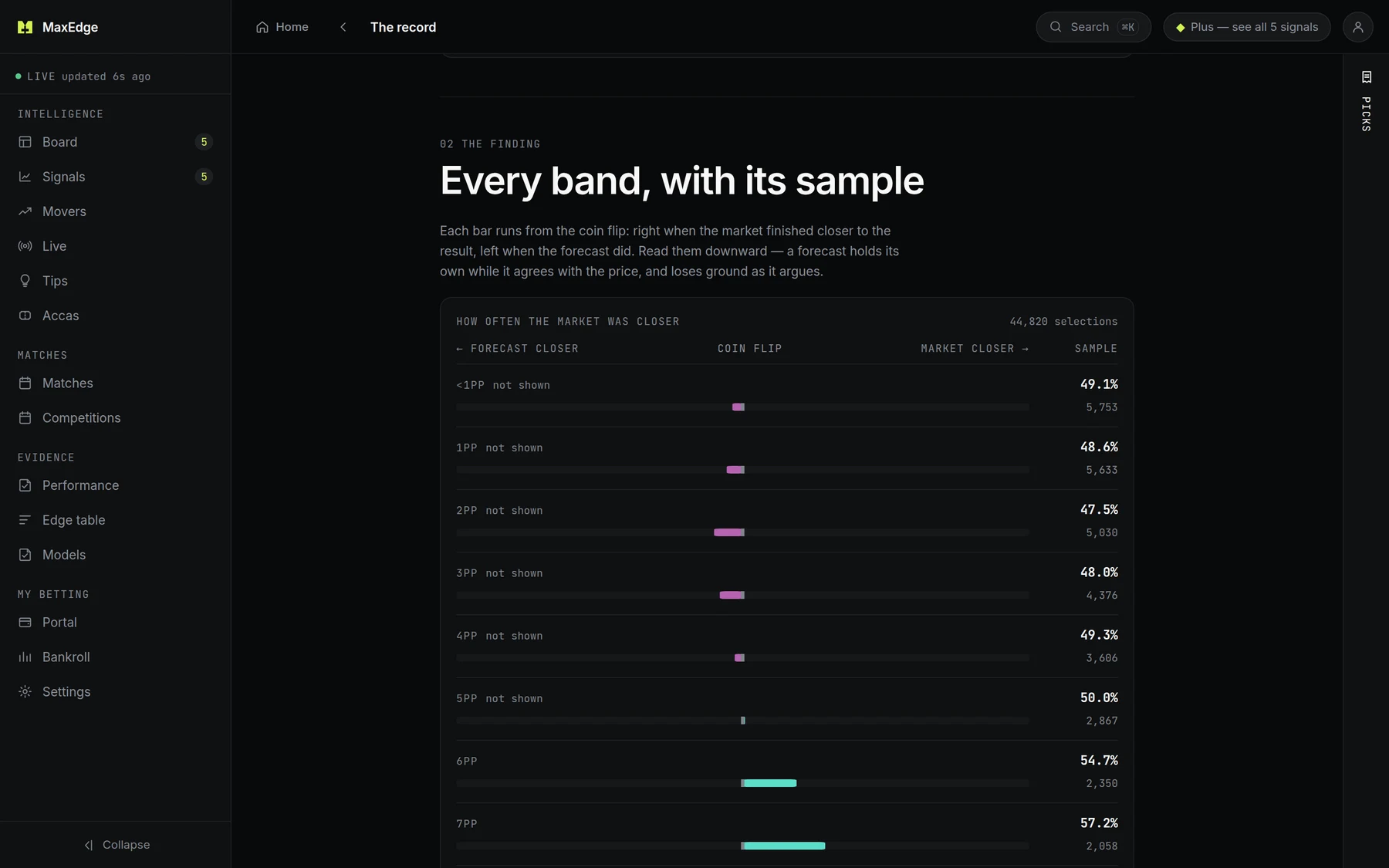
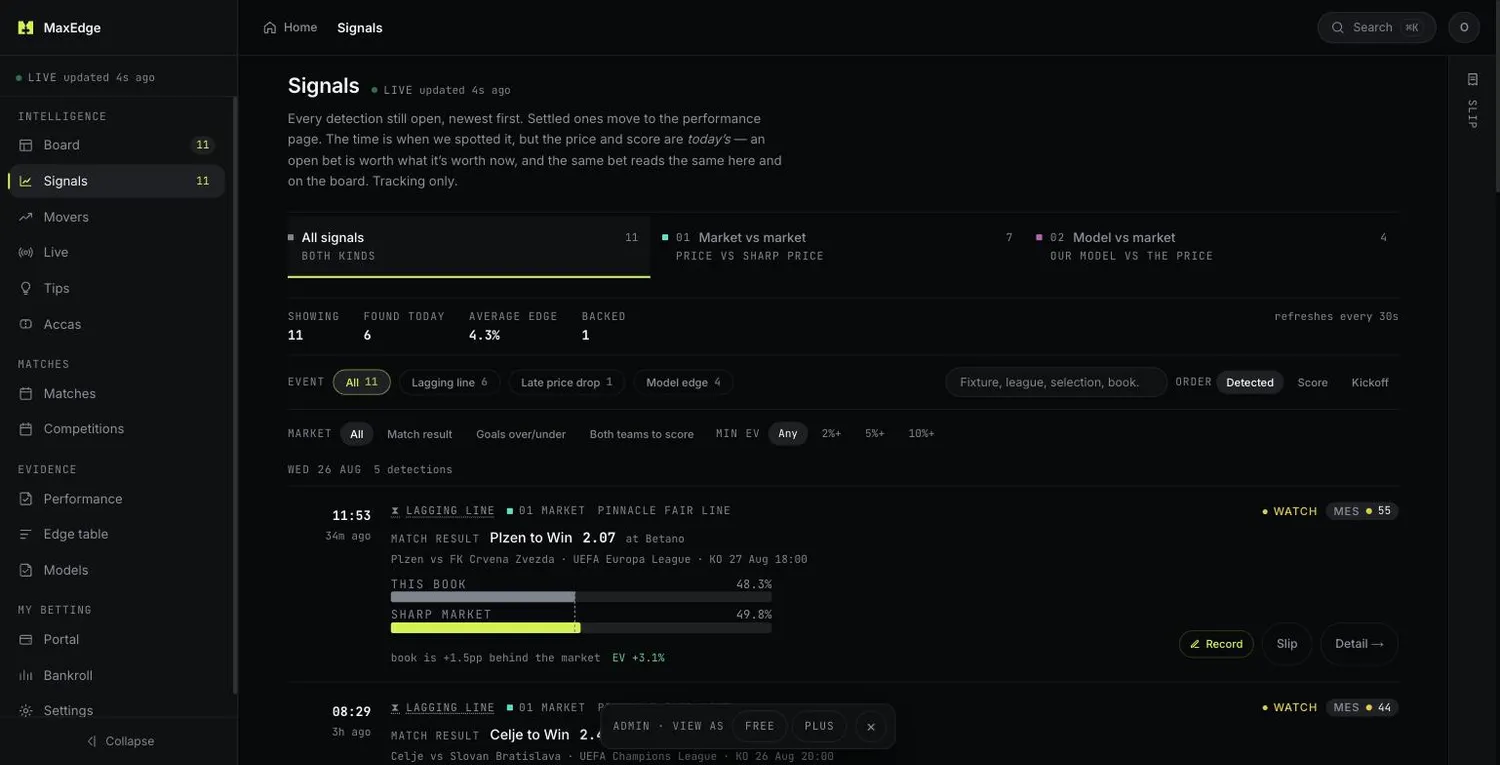
Every claim on screen carries the number underneath it. A selection shows the bookmaker's price, the true price with the margin removed, the gap between them in points, and which model made the call. There is nowhere for a rounded-up number to hide.
The design leans on the instrument tradition (mono numerals, tight data density, restraint with colour) so the interface reads as measurement rather than persuasion. Colour carries status, never excitement.
The free tier is a real product rather than a trailer: the day's pick when there is one, fifty tracked bets, the profit-and-loss curve, and every model's calibration data. The paid tier adds the rest of the board, not the honesty.
Impact
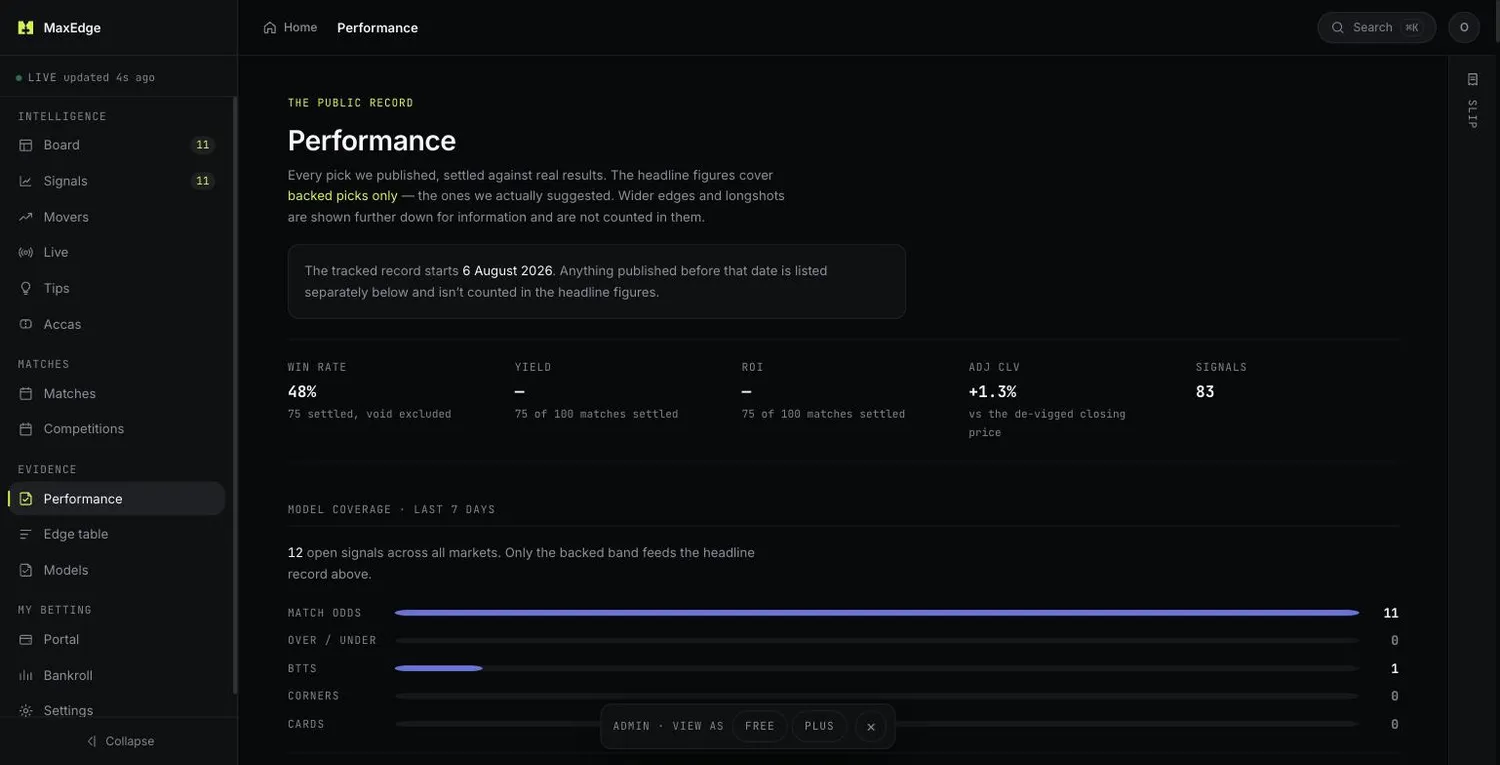
Live at maxedge.live, settling every published signal against the real result and the closing price since 6 August 2026.
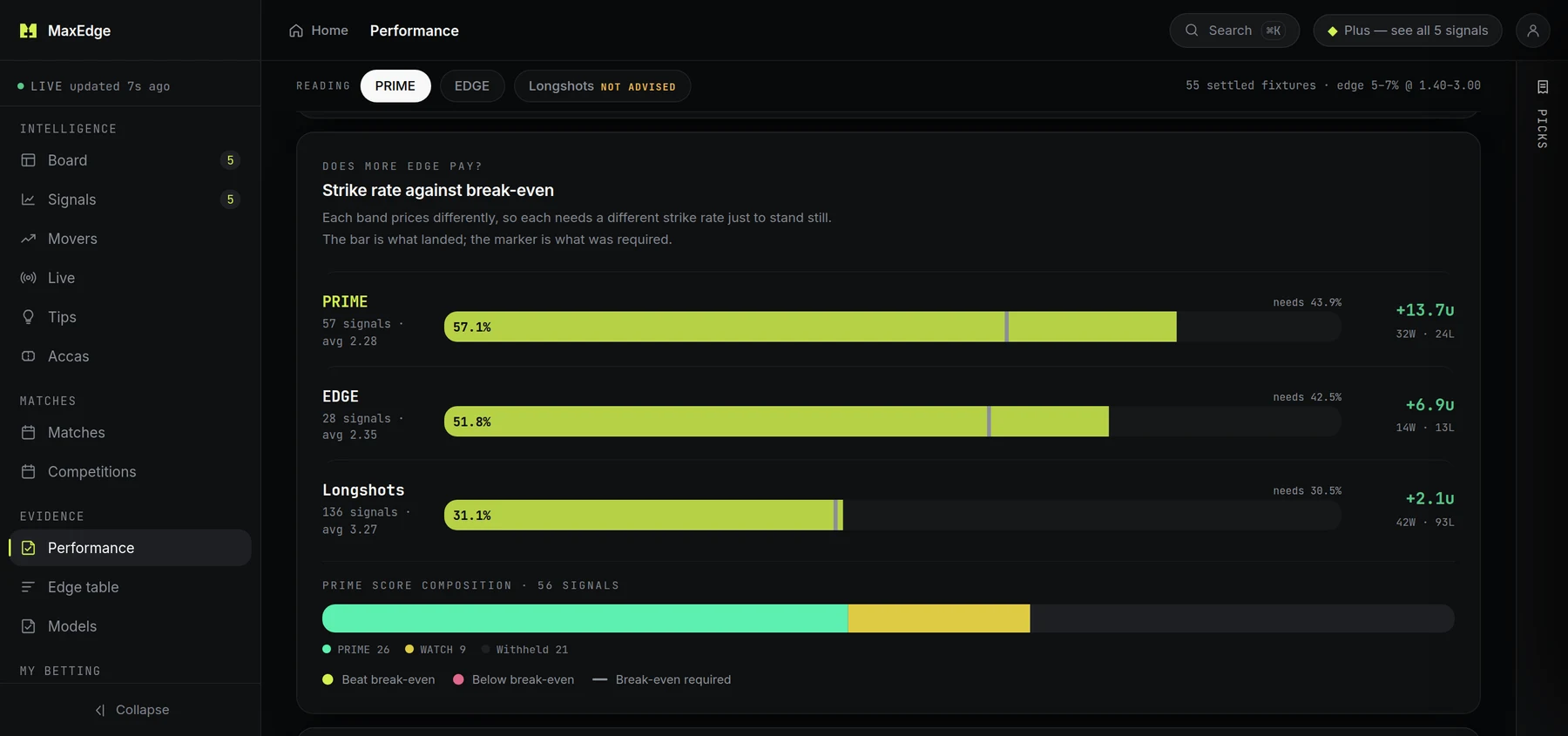
As it stands: 218 settled signals, reported in three bands rather than one flattering average. The backed band is running 57.1% against the 43.9% it needs to break even at an average price of 2.28, a yield of +24.4% and no-vig closing-line value of +4.34%.
It is still labelled provisional on its own page, because 55 of the 100 settled fixtures the standard requires have landed. The third band, longshots, is published under the words NOT ADVISED and returns 31.1% against the 30.5% it needs, a rounding error, shown rather than buried.
Free tier and a single paid plan at £12.99 a month through Stripe. Tracking only: MaxEdge records selections and settles them, and never places a bet. Built to UK responsible-gambling norms throughout.